Showing posts with label generosity. Show all posts

Friday, 11 March 2016

What’s mine is yours…

The rain returned eventually, with the 
sweet sound of it pouring into my tank. (H.Schulz)
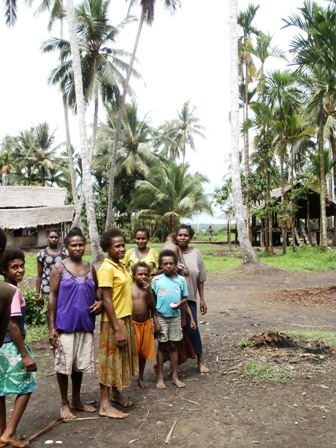
A constant struggle for me when living in the village is the different cultural expectations of ownership and stewardship. What belongs to me and what belongs to the group? What is to be used now and what is to be saved for later?

I have a wonderful neighbour and village brother who built my house, looks after it while I am away and is one of our translators. He recently named his newborn daughter after me. I am sure that I have some sort of responsibilities for my namesake, but have no idea what they might be. He himself is a generous person who often has other people living with him in his small house and who is often doing things for other people. It is this particular relationship, with its web of obligations that is the hardest for me to navigate.

What makes it even harder is that it is often the small things that leave me in a crisis, such as an umbrella or a bottle of water.

My umbrella was left in my storeroom when I went away. It was about the only thing not packed in a box because it was too long. When I returned, it was the only thing that had gone walkabout. It had been borrowed to give shade to my namesake while they went to fish camp. When they returned, I saw the umbrella in use, but it didn’t return to me. A week later, when I was walking somewhere in the middle of the day and needed it for shade, I asked about it. It was brought out of the house, broken and barely held together with string. It gave me the shade I needed, but it is useless as shelter from tropical downpours.


Why was I so upset about an umbrella? It was that my trust of things left in storage had been broken, that something I needed was not there when I needed it. My neighbour though, saw it as an appropriate use of an item doing nothing to meet a need for my namesake. My tension is that I can understand his reasoning, but still wish it had been left alone and was in one piece when I returned.
Another day I found myself annoyed at a request for a few litres of drinking water, and even more annoyed at myself for being annoyed.

At the time it was dry season. As this was first time in the village in January, it was hard to tell if it is a drier than usual dry season, but it seemed to be that way. Each morning and each afternoon there was a parade of people going along the path by my house to get drinking water from a bush well. The round trip seems to take them about 45 minutes. Meanwhile, my house has two 1000L rainwater tanks.

Before I came to the village, my neighbour had called asking for permission to clean out one of my tanks. We did not communicate clearly, and I thought that rain was falling more often to refill the tanks, so I said yes, as long as you leave me at least half a tank (500L). When I got to the village I found out that there has been little rain, so the tank was not refilling, but that everyone had very much enjoyed getting a container of water from my tank when it was cleaned, as well as from half of the second tank. I was left the half a tank as requested. This probably saved the village one day of walking into the bush for drinking water, maybe two.

My umbrella two years ago when it was new. (D.Petterson)
When I returned, my neighbour turned up asking for drinking water in bottles, and I was annoyed. Why?! I did not make the rain fall, I just caught it. I did not earn it, yet I was reluctant to share it. Part of it was knowing that half a tank will not go far if I’m providing water for a house of six or more people next door. Part of it was knowing that if my water runs out, someone else will be the one walking into the bush to get water for me. Part of it was just cultural annoyance that ‘my’ water should be assumed to be ‘their’ water from a different cultural perspective. A lot of it was annoyance at myself for being a scrooge about water, an essential ingredient for life.

My first week in the village, I was cautious with my tank, but still used it for washing etc, thinking rain would continue to fall like it had the day after I arrived. By week two we’d had little rain, my tank was much lower and I switched to washing with well water and only using my tank for drinking. I still had occasional requests for water, which I would help with, but was not getting regular requests. This seemed like a good balance for me.

Still, the question of what is mine, what I am keeping for later, what is communal, and what I am sharing with others, is an ongoing struggle. Coming from somewhere very individualistic when it comes to possessions, I am having many of my assumptions challenged, which is a good but difficult process.

Friday, 31 July 2015

Generosity

I struggle with generosity.

This may seem like a strange statement from someone whose income is based on the generosity of others  who give to support my work. It is stranger still when in the last six months I’ve been given a house in Ukarumpa, been built a house in the village and been given a car. The car is almost a bigger deal than the house in Ukarumpa, as they are in much higher demand. So much has been given to me, and I try to always be giving to others, but still, I struggle.

My struggle is with how much to give to whom and when.

Compared to my people in my village I am rich, so in a position to give lots. From my perspective I have given up much in coming here and want to be a good steward of my resources over a long period of time. Where is the balance between holding on for later and blessing someone now? What is judicious giving that does not create a power imbalance and impossible obligations, but builds relationships and expresses generosity?

In a conversation with a village sister, she was telling me about her father. She said that “He was a good man, he did not hide his money but shared it with everyone”. Later that day she shared her last three damp matches with a neighbour. When this is the standard, how do I respond? I clearly have cargo, how liberally do I share it? When I prefer giving in secret, how do I deal with a expectation of visible giving? How do I deal with this long term?

As I pack to return to the village, I realise that if I was being a scrooge, I would probably have half the cargo I currently have. I have packed far more food than I can eat, based on the fact I plan on sharing most of it. I have assorted gifts which I bought on the basis of knowing they are helpful but hard to get in the village. Fishing line, fishing hooks, soap, tea towels, knives, vegetable seeds, rope, sweet potatoes, regular potatoes, carrots, salt, popcorn… small things that build relationships but are not overwhelming. If matches weren’t classified as dangerous cargo, I’d take a pile of them too. There are some larger items, such as a kettle or a lantern, for particular people who have made an extra effort to make me welcome, but most things are small. I don’t have a final answer on how to be a generous but balanced giver, but my cargo pile says I’m working on it.
How to thank the ladies who looked after me in their house for five weeks,
feeding me and boiling hot water for me? A new kettle, a new knife,
a new strainer because I know theirs is broken, fresh
Highlands vegies and maybe some small items.


What I struggle with most is ‘askims’, or expectations that something will be given. I’ve had some clear messages about exactly what someone would like me to bring with from the Highlands for them. Sometimes these requests are reasonable, in that it is from someone who has done a lot for me and reciprocation with a gift is appropriate, but I still struggle with the direct request. So far I’ve been buying some things as requested and being creative with other things. I am trying to both hear the request and reciprocate, while not being forced into purchases. Other people who ask I have a limited relationship with, so I don’t feel so bad saying no.

How to thank the person who did most of the building
 of my house? A long cord on an LED light that will 
attach to my solar power system and extend from 
my house to his, and tools to help him rebuild 
his own house seem appropriate

People also ask me to buy things that they will then purchase from me. It is true that I have access to the outside world, to shops and resources in a way that local people do not. To buy things and bring them for them is to bless them with access they did not previously have. Yet, I do not want to run a business of buying and reselling as that will detract from my community based work and undermine local micro businesses. Somewhere there is a balance between being helpful and being a business person. The request for me to find and buy reading glasses to resell seems both reasonable and helpful, and I intend to follow up on it for a future trip.

There are some requests that are easy to turn down, like the day someone asked me to give them their depo family planning shot! They had the capsule, they just needed someone to inject it. The look of surprise and horror on my face when they asked gave all the answer they needed and the conversation ended in laughter. I am not a medic and not going to give shots! I doubt anyone will ask me that again.


How to thank all the women who have helped me with language learning,
 making the thatch for my house, feeding the team at the working bee
and much more? Food and assorted small gifts will hopefully express my thanks.
At the moment I have more questions than answers when it comes to generosity and the giving of gifts. I want to bless others with all the good things I have been blessed with, but I do not want to set myself up for constant cargo expectations. I am sure I will get this balance wrong many times over, in fact I may never find the balance, as it will change with circumstances. At the moment my preference is to err on the side of giving too much.