Friday, 4 September 2015

Hospitality and Independence

I was sitting by the rain water tank washing my clothes when a well meaning woman came up and told me that I should give them to her to wash for me. I’m not sure if she thought I was not doing a good enough job (I certainly don’t scrub as much as locals do), that the work was somehow beneath me or she was just being helpful, but my answer was a polite no. This is but one example of the times I’ve found myself seeking a balance between local hospitality and being independent.

I don’t really enjoy hand washing, but neither do I want to hand over everything for other people to do for me. When do I let someone to help me and when do I hold on to my independence and do it myself?

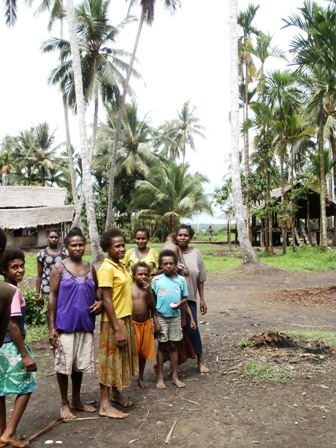
Another time I was walking through a muddy village and a lady insisted on holding me by the elbow the whole way. It is true that I may have slipped if she wasn’t there, but the chance was small. I felt that slipping over, although embarrassing and messy, was not the biggest deal, but to my friend it would have been a slight on her care for me. If I fell over, she would have been seen as a poor host. Recognising this, I let her guide me by the elbow, keeping her dignity intact, even if mine was a bit bruised by what felt like babying.

There are many things where I am glad that I can ask for help and that people are willing to help me. Drawing water from a well is something I’m yet to try, as I’m worried I’ll fall in. It is also something people are unwilling to let me try, as they have the same concern. They’d much rather draw water for me, than let me take that risk. This situation is a win for both of us.

I have enough trouble sitting in a small canoe,
let alone standing!
Being allowed to go out in a small canoe has been a contentious issue. Children here grow up in canoes, and many are in fact literally born in a canoe, as they did not get to the hospital in time. Their sense of balance is trained from birth and they are unlikely to tip the canoe. On the other hand, I have little experience with small round bottomed dugouts and am a liability to anyone else in the canoe. Often they are too small for me to sit right down in, so I have to crouch, making me less stable and raising my centre of gravity to make the whole thing less stable. People do not want to see me injured, so do not want to let me in a small canoe.

I on the other hand, would like to go out with the ladies sometimes, to check fishing nets or crab baskets. The first time I went with my village sister she got told off by numerous people afterwards. I spent a lot of time assuring them that I’d wanted to go, I’m not afraid of falling in and I know how to swim. They weren’t convinced. Thankfully it was a successful trip and I did not tip the canoe. This was not so much for my dignity or my sister’s standing in the community, but because there was a bumper catch in the fishing net and I would have been horrified to tip the canoe and lose everyone’s dinner!

The second time I went in the canoe I managed to fall in before we left the river bank. The news had made it around our village and down to the next one in about half an hour. Who needs the internet to spread news fast?!?! Wet, I got back into the canoe and we went to check the net. My village sister is pretty amazing for still letting me go with her, even though she knew she’d face disapproval from people later. The catch was not as good this time, but I felt more comfortable in the canoe and we made it back in one piece. As I was already wet, I then jumped in the river for a swim. This was both a nice way to cool off and proved to those watching… and those who heard the news later… that  I indeed know how to swim well.
Kids on their way to school by canoe


In my own world I am a competent, intelligent, independent adult. In the village I am a cared for guest who is still learning how to do the most basic things. Finding the balance of hospitality and independence is hard. I want to relate well with people and accept their generous care, but I also want to be able to be myself and not always have a baby sitter looking after me. I suspect it will be a long time before I find the way to balance these things.

Friday, 28 August 2015

Daily Downtime

After detailing the exhausting work of language learning, it seems appropriate to let you know one of the ways in which I practice self care and attempt to prevent burn out. Language learning is exhausting, village life is tiring, being on show is frustrating and looking after myself is necessary. One of the primary ways I do this is by having my daily downtime, or afternoon nap.

Each day at lunchtime I retreat to my room for a simple lunch of crackers and spreads. Mostly this is peanut paste and jam, but I also take with a jar of nutella to have one chocolaty cracker per day. It’s amazing what a daily chocolate dose can do for my morale, and so far the ants have not yet broken into my sacred stash. There may well be tears if they ever do.

Noticing moments of beauty and enjoying them renews me.
After lunch I lie down on my bed to relax. I spend much of each day sitting on the floor, and a middle of the day back stretch and relax is mighty helpful. Sometimes I fall asleep, but mostly not. I put my earphones in, turn my music on, shut my eyes and tune out the village for a little while. My mosquito net is my fortress and for an hour or two I am somewhat removed from the stresses around me.

Often I listen to worship music on my phone. Hearing favourite songs with Godly words reminds me of why I am in the swamp in the first place. I am not here for credit or riches, but because I feel called to serve and answer a need. Listening to worship music also reminds me that God is much bigger than my problems, fears and stresses, and to hand them all back rather than worrying myself. This afternoon quiet time is a good time for prayer.

Feeling watched? A crowd waving us off from Teredau.
I pray a lot more in the village than elsewhere. God is the only one I can honestly tell exactly what I am thinking without causing offence. God is also the only one able to solve the challenges of village life. All my other communication in a day is limited by cultural and language barriers. Prayer has no such barriers.

Sometimes I use my down time to write letters, write in my journal or to do puzzle books. I have a mix of crosswords, cryptic crosswords, number puzzles and word puzzles. For someone who is claiming brain exhaustion, puzzling may seem an odd way to relax. What is does is gives me something to puzzle over that I am competent at and restores my confidence that I am indeed an intelligent adult who is able to solve problems. Language learning can be disillusioning, so this sort of encouragement goes a long way.

My sanctuary.
Retreating in the middle of each day allows me to introvert. For me, relationships take energy while time alone renews my energy. Village relationships take lots of energy, as I am still learning how to relate well in the culture around me. I am trying to learn a new set of social cues and this takes focus. I am often confused and this drains me. Even with my daily village introversion time, I still return to Ukarumpa and act like a hermit for a week or two before I’ve really recovered. 


Rest, retreat, music, prayer, puzzles and chocolate. These are the main elements of my daily downtime and how I try to manage my energy levels in the village. Learning how to live well in the village is a work in progress, but this is one step in the right direction.

Friday, 21 August 2015

Privilege

Recent events have reminded me of what it means to be among the privileged people in our world and to be thankful for being born among the ‘haves’ rather than the ‘have-nots’.
There are many ways privilege can be measured, and too often we measure ourselves by what we don’t have, rather than what we do. There will always be someone else with more. When I look at what I do have, I am among the richest and most privileged people not just now, but through all of history. The medieval kings and queens who make for fun fairy tales were not as rich as I.
That which makes me privileged includes:

Health and access to healthcare. It is easy to take health for granted, until you or someone you know is dealing with illness. That I have been healthy most of my life is a blessing. That when I became ill recently (not seriously, but enough to interfere with life) I had access to doctors and medicine was a privilege. In PNG, not everyone has that, at least not without a long journey. Even at the end of the journey to a hospital, there is no guarantee that the staff, equipment or medications will be available to help. When the locals doctors decided I needed to follow things up with specialists, I was able to fly back to Australia and see specialists there. The privilege of having the funding, insurance and passport to be able to do that makes me one of a very small number in this country. Once in Australia I chose to spend money rather than time and go through the private system to get answers sooner. That I had the funds to do this is a privilege.  Even if I had not, the public system in Australia gives high quality health care to those in need, it just might take a while to get to the head of the line if your condition is not critical. We are privileged to have access to such care, access that does not require going into debt.

Education and Literacy. I sit here at my computer, typing my thoughts so that  I can put them on the internet and share them with the world. In a box at my parents’ house I have enough university degrees to allow me to put more letters after my name than I have in it. I have been taught critical thinking and I can engage with the world. These are the big things of literacy and education, but the fact I can read the instructions on the medications from the doctors and ask questions about what they’ve said, are the important everyday applications. So many cannot do this. They have not had enough education to read meaningfully, or even at all, and have not been taught to challenge authority and take control of their own bodies and their own lives. That I can read fluently and think critically makes me privileged. That I can do this as a woman makes me even more privileged.

Safety and Freedom. People always ask me about my safety in PNG. I am safe here, I am careful about my safety, and I am not afraid. Maybe I do not walk about at night on my own or head to local villages on my own, but these are small and manageable things. I can sleep at night without wondering if a war will land a bomb-shell on my house. I don’t worry about drug cartels or gangs, as people do in other places. I can publicly express my faith without fear of persecution. Although my clothing is less revealing than standard Australian wardrobes, there are no laws or religious police who will beat me for choosing to dress otherwise. When others are willing to lose everything, including their lives, for a chance at the level of freedom I live with, I am reminded how privileged I am to live with such safety and freedom.
There is also the security that my faith gives me. I believe that I am a beloved child of God, of intrinsic worth to the Creator of everything. I have stood on the deck of a ship at night, out of sight of land, with an infinity of stars above me and mysterious kilometres of ocean beneath me and known in my deepest being that I am known and loved. I am not a speck lost in an infinite universe. Although I have my ups and downs, I have a hope and joy in life and do not fear death. Dying sounds a bit scary, but death itself does not scare me. This security in life and death is not something everyone knows.

Food, water, shelter. Maybe these things should have come first! At the moment El Nino is causing a drought in PNG. Further up in the Highlands than my base it has also caused frost. When frost kills the gardens of subsistence farmers, they go hungry. When the water in the creeks goes down and becomes dirtier, people still need to drink. That I have a house with warm blankets to sleep under at night, half a tank of rainwater (I’m from Adelaide, I’m practiced at water conservation!) and food in the cupboard, with funds to buy more when needed makes me a privileged person. Not only do I have food to survive on, but food to enjoy, which makes me rich indeed. I do not always appreciate these everyday things as I should.

Community. Although I am single and live alone, I am not really alone. I am part of a network of communities and belonging; here in Ukarumpa, in Gulf Province, in Australia and with friends scattered across the world. I have my moments of loneliness, but the reality is that I have good and loving relationships with many people near and far. Such belonging should not be taken for granted. Many are alone, not knowing their neighbours, having no one to call on, cut off from their families. When I was stressed recently, I had many friends to call on, friends who would rearrange their plans to make time for me when I needed them. I am honoured to call these people my friends and family. It is a privilege I am aware others lack, and that prompts me to reach out to those who are less networked than I.

Meaningful work. This may seem an odd addition to the list, but having recently had a few weeks sick leave, returning to work has reminded me that I enjoy what I do and that this is a privilege. So many just struggle to make ends meet. To not only have regular income, but to be doing something I am skilled at and passionate about it a privilege indeed.

Have-nots. Reflecting on what I don’t have is important in recognising what I do have in two ways. The first is to help me see what I do have, and the other is to help me appreciate what others have. This second path reminds me that privilege takes many shapes and that I should never expect people to be thankful for the exact same things as me. One thing I do not have, which others do, is land. I say this as a reminder of the privilege that the majority of PNGns have in secure access to their land. Although I have much that they don’t have, their life has other good things. 
Sailing in Cairns… Yachts are often depicted as the ultimate expression of privilege. My afternoon of sailing expressed my privilege in that I was healthy enough to go, could read the information to find out how to join in, had the funds to pay for it and as a woman could safely decide to do this if I wanted to. Yep, I’m privileged!

Friday, 14 August 2015

Language Learning Challenges

There are many challenges when it comes to learning another language.

One is that people want to teach your the right and proper way to say things. This can mean long and confusing discussion of what is best to say before I am given a response. It can also mean that I am being taught archaic terms rather than the everyday terms adopted from another language. On numerous occasions I’ve been told, ‘That’s the Motu word, you need to say X’ with the ‘X’ being a word they had to think hard to find as no-one actually uses it in everyday speech. Learning what is Motu is good, as I intend to learn Motu eventually, but knowing what is every day is more useful, as I want to hold everyday conversations.

As English words often slip into Kope conversation, I have occasionally surprised people by understanding more than they expected. When days of the week and place names are mentioned, I can sometimes guess what the plan is without understanding the Kope words that hold it all together. This is not suddenly fluency, just me practicing the detective skills that are a constant part of language learning and analysis.

Dialect differences are a challenge. In both Ubuo and Goiravi, people want me to learn their variety of Kope. These two villages are a 15 minute walk apart, yet they have differences and they are proud of them. This is rather confusing to a beginning learner, so I have been respecting their difference by keeping a list of dialect differences and writing down what they tell me. How we’ll deal with these things when it comes to a written translation is a challenge for another day.
A view along the Mira River from Goiravi, a 15 minute walk
from Ubuo, but already there are dialect differences.
Another challenge is getting people to let me make mistakes and learn slowly. When I try to communicate using my limited understanding, I inevitably end up being corrected with the right way to say things. This can be disillusioning when I just want to try saying something. While it is good to learn correct grammar, just being able to stumble along and communicate without a lecture would also be nice sometimes.

In their enthusiasm to help me learn, I often find myself overwhelmed by the tutoring  I am given at short notice. I will use a phrase that I have learnt, get it right and have it in context, but just as I’m feeling good about having communicated, someone will tell me five others ways I could say the same thing. Just let me learn the simple way first!

One challenge that I come across constantly is that if I have correctly parroted a phrase, or written it down, people consider it permanently learnt. Parroting and writing does not equal completely remembered and able to be heard and used, but people expect that it does. If they know I wrote it down last week, they expect me to remember it this week. Sometimes that is true, but often it is not.
I was given a word list, which meant I was expected
to know and be able to use all the words on it!
Tone is challenging for me, as my ears are still getting tuned to hear it, and it does not seem to be used consistently. I need to both learn to hear and replicate the tone and learn when it matters and when it doesn’t. I am thankful for my recording, that I can listen to and echo, as well as other linguists who take an interest in Kope tone. I’ll happily let them do the tricky analysis and then apply it to my learning.

Finally there are the homonyms, or near homonyms, that confuse the beginning learner. Some of my confusions so far are:
  • Mo daradara ka and Mo darudaru ka; The first means I am confused, the second that I am yellow.
  • dubui and dubai;  Men or bananas… it pays to know which one you are eating!
  • ididi and idi’idi;  Build or black. The cat is black, the cat is not built, nor is it building anything.
  • rio-i, rio or ri’o; inside, want or you (plural).  Usually context gives away which one is which, but they’re all common words and they keep me alert.

…and one tongue twister I discovered by accident…
  • Ooboi oboboboi da oboi i’ai;  The woman is fetching water from the well. A common occurance in the village and a useful phrase to know, just really hard to say!

Oboboboi ka. A well.

Friday, 7 August 2015

Language Learning Techniques

At this stage in my translation project, my primary goal is language learning. I am blessed to step into a programme where others have gone before me. There are many simple books for teaching children literacy, a picture dictionary, the makings of a longer dictionary and some grammar notes. All of these are invaluable resources that help me to learn, but the bulk of my learning is through immersion. 
The river at Ubuo
There are techniques to help with language learning immersion which I learnt before coming to PNG. I admit to not knowing which teaching philosophies I have picked and chosen from,  I just do what works for me.

When I am in the village, I try to sit down with a local lady five days a week for some structured language learning time. I come prepared with my sketch of a lesson plan outlining the sorts of activities I would like to do and resources to help with this. My resources are generally hand drawn pictures, prompts that enable me to ask questions and elicit responses. Asking ‘How do you say…’ tends to get formulaic responses. Learning key phrases and then using them as I point at my pictures, elicits more natural responses.

As I advance with learning, the questions I can ask and the responses I get will become more complex. At the very beginning, I just had a series of noun pictures, and would get my language assistant to say the name of one and I would point at it. Not very complex, but good practice in hearing and responding. Slowly I added instructions such as ‘pick up’, ‘put down’ and ‘give’, progressing to ‘put in’, ‘put on’ or ‘put under’. As I collect vocabulary, I’ve been making flash cards for myself, to help with the memorisation of new words.
My village picture I use for eliciting words and phrases
In each language learning session I also record things that I have been learning. People get sick of saying the same thing over and over again. My voice recorder does not get bored of repeating itself, allowing me to learn more quickly. This also allows me to bring the recordings back to Ukarumpa with me, where I transcribe them and keep my learning going. As I listen to them in the Highlands, the backing vocals of roosters, children, hammers, kittens, dogs, the school bell and grumbly stomachs reminds me that these really are field recordings, not something polished.

As I progress with my learning, I have been both writing and recording stories. My story writing is very simple at the moment, but it forces me to put together the words and grammar I do know in new ways. I also learn new words when I hit a block in expressing myself and ask for help. When I record stories, I later in the day sit and attempt to transcribe them. In doing so, I am teaching myself to hear word breaks, recognise the changes required by grammar, and learning entirely new words and phrases.

Once a week, if rain or tide have not made the path impassable, I walk 15 minutes to the next village, Goiravi, to learn from the ladies there. Each time I’ve been to Goiravi, a crowd of 10 to 20 women has shown up to help. Learning from that many teachers is nearly impossible! I keep going though, as I have been getting to know a few of the ladies better and they’re great teachers. It is also a good relational exercise, as I make the village feel like they are part of the programme too. Most weeks I think the benefit of my trip is more relational than linguistic, but that is a valid reason to keep going.
Verandah view when language learning in Goiravi

Learning a language by immersion is plain old hard work. I end each day with a tired head of constant listening, decoding and confusion. As I try to communicate anew each day I keep telling myself that I only have to learn the language once and that this level of difficulty will pass. I just hope it passes sooner rather than later!

Friday, 31 July 2015

Generosity

I struggle with generosity.

This may seem like a strange statement from someone whose income is based on the generosity of others  who give to support my work. It is stranger still when in the last six months I’ve been given a house in Ukarumpa, been built a house in the village and been given a car. The car is almost a bigger deal than the house in Ukarumpa, as they are in much higher demand. So much has been given to me, and I try to always be giving to others, but still, I struggle.

My struggle is with how much to give to whom and when.

Compared to my people in my village I am rich, so in a position to give lots. From my perspective I have given up much in coming here and want to be a good steward of my resources over a long period of time. Where is the balance between holding on for later and blessing someone now? What is judicious giving that does not create a power imbalance and impossible obligations, but builds relationships and expresses generosity?

In a conversation with a village sister, she was telling me about her father. She said that “He was a good man, he did not hide his money but shared it with everyone”. Later that day she shared her last three damp matches with a neighbour. When this is the standard, how do I respond? I clearly have cargo, how liberally do I share it? When I prefer giving in secret, how do I deal with a expectation of visible giving? How do I deal with this long term?

As I pack to return to the village, I realise that if I was being a scrooge, I would probably have half the cargo I currently have. I have packed far more food than I can eat, based on the fact I plan on sharing most of it. I have assorted gifts which I bought on the basis of knowing they are helpful but hard to get in the village. Fishing line, fishing hooks, soap, tea towels, knives, vegetable seeds, rope, sweet potatoes, regular potatoes, carrots, salt, popcorn… small things that build relationships but are not overwhelming. If matches weren’t classified as dangerous cargo, I’d take a pile of them too. There are some larger items, such as a kettle or a lantern, for particular people who have made an extra effort to make me welcome, but most things are small. I don’t have a final answer on how to be a generous but balanced giver, but my cargo pile says I’m working on it.
How to thank the ladies who looked after me in their house for five weeks,
feeding me and boiling hot water for me? A new kettle, a new knife,
a new strainer because I know theirs is broken, fresh
Highlands vegies and maybe some small items.


What I struggle with most is ‘askims’, or expectations that something will be given. I’ve had some clear messages about exactly what someone would like me to bring with from the Highlands for them. Sometimes these requests are reasonable, in that it is from someone who has done a lot for me and reciprocation with a gift is appropriate, but I still struggle with the direct request. So far I’ve been buying some things as requested and being creative with other things. I am trying to both hear the request and reciprocate, while not being forced into purchases. Other people who ask I have a limited relationship with, so I don’t feel so bad saying no.

How to thank the person who did most of the building
 of my house? A long cord on an LED light that will 
attach to my solar power system and extend from 
my house to his, and tools to help him rebuild 
his own house seem appropriate

People also ask me to buy things that they will then purchase from me. It is true that I have access to the outside world, to shops and resources in a way that local people do not. To buy things and bring them for them is to bless them with access they did not previously have. Yet, I do not want to run a business of buying and reselling as that will detract from my community based work and undermine local micro businesses. Somewhere there is a balance between being helpful and being a business person. The request for me to find and buy reading glasses to resell seems both reasonable and helpful, and I intend to follow up on it for a future trip.

There are some requests that are easy to turn down, like the day someone asked me to give them their depo family planning shot! They had the capsule, they just needed someone to inject it. The look of surprise and horror on my face when they asked gave all the answer they needed and the conversation ended in laughter. I am not a medic and not going to give shots! I doubt anyone will ask me that again.


How to thank all the women who have helped me with language learning,
 making the thatch for my house, feeding the team at the working bee
and much more? Food and assorted small gifts will hopefully express my thanks.
At the moment I have more questions than answers when it comes to generosity and the giving of gifts. I want to bless others with all the good things I have been blessed with, but I do not want to set myself up for constant cargo expectations. I am sure I will get this balance wrong many times over, in fact I may never find the balance, as it will change with circumstances. At the moment my preference is to err on the side of giving too much. 


Friday, 24 July 2015

Going my way?

I like a plan. Really, I do.

It suits my personality to have a plan, and a backup plan, in place at all times. I like to know what I am doing, when, where, why and with whom. In PNG though, plans are rarely this clear or reliable. I am sure there are some PNGns who equally like a plan and I know there are some Aussies who thrive on having no plan, but me, I like a plan. Let me illustrate changing local plans for you through the adventures of my two trips from Ubuo to Kikori.

The first time I went to Kikori from Ubuo, we had asked around for several days if someone was going that direction. In the end we got a tip-off that a boat was going from Karati. We sent messages to let the people know we’d join the boat there and were told that all was well. On our way to Karati, for a meeting and to join the boat, we passed them going the other way, already underway for Kikori. Mid river we stopped for a chat and a planning session. No, they had not got the messages the day before. Yes, they could wait for us to join them after the brief meeting we first had to get to at Karati. We went on our way.

At Karati we found another boat leaving for Kikori. It was decided that it would be better for me to travel with them and several phone calls were made to tell the first boat to continue without me. I’ve no idea if they really received the message, or if they just continued without me as they figured I’d find another ride. The second option worked out and we headed off to Kikori in good time. There was a stop of nearly an hour while the driver bought extra fuel at a village along the way, but I made it to Kikori in the end… about 15 minutes ahead of the first option. As they had a 15hp engine and we had a 40hp, we clearly spent a lot of time buying the extra fuel.
Refuelling while underway, although it still was not enough!
The second time I went to Kikori, I was planning to go on ‘fortnight’, or the Friday every second week when people get paid. The previous fortnight several boats had gone from Ubuo to Kikori, so I thought I’d be fine, but no one seemed to be going. Discussions were held and I was told there was a plan. Friday morning it rained heavily and continued all day. One person who was to come pulled out, meaning the whole trip was on hold. By Monday the rain had stopped and enough people committed to the trip that I made it to town.
A beautiful short cut (that actually is shorter!) on the way to Kikori
On the Thursday I started asking around about any boats going back towards Ubuo that I could get a ride in. At the town market I caused much curiosity as I asked around for any Kope people, found a cousin-sister of a village-sister of mine and put in my request. I asked the hospital administrator if he knew anyone. I stopped by where the dinghies and dugouts pull up and asked if they knew anyone going my way. I sent an sms to the village to see if they knew anyone planning a return trip. I cast a wide net and waited to see what would happen. On Friday I repeated my request.

Late on Friday someone came to the door. They’d heard the doctor wanted to go to Ubuo. I am not a doctor, but as I was staying in the doctor’s house, the confusion was understandable. One of the hospital staff recommended the person, he was from a neighbouring village and a plan was made. I gave him money to buy fuel as my contribution towards the trip.
Sunrise in Kikori, looking across the river
The next day the boat turned up, a little later than expected, but that was not really unexpected. I loaded myself and my things and we headed off. As we took bends in the river, it seemed like we were taking a different route to what I expected. I couldn’t do much about it but trust the people who helped with the plan and pray that things were on track. After a few hours we were pulling into a village near Paia. I thought we would just drop someone off and be one my way, but the whole canoe and all its contents was emptied out… except me. Um?
Heading back to Ubuo by dugout
‘We will just get some fuel at Paia and be on our way’, I was told. ‘Do I have extra kina for more fuel?’

We crossed the inlet, rafted our dugout up to a timber company tugboat and sent someone to town to buy fuel. The store was closed and we had to wait a few hours. As we waited, the story came out that although the driver was from a neighbouring village, he lived in his wife’s village in a different area. His brother, who worked at the hospital, had convinced him he had to take me back to Ubuo, even though it was out of his way. In trying to be helpful, people had actually ended up causing frustration for both of us.

Eventually the fuel was purchased, we were under way and we made it back to Ubuo, where they dropped me off and promptly returned to Paia. What would have been a 3 hour journey if direct had taken nearer seven hours because of detours and delays.

After these two adventures in getting to Kikori and back, I have been thinking about buying my own boat and motor. This will of course create all sorts of other frustrations, but my hope is that they are less than the frustrations of not owning one.


I like a plan, and to always be asking ‘are you going my way?’ is not a plan that works for me.